

LSU Fans’ Final Resting Place at Tiger Stadium? Viral NIL Claim Is Unverified

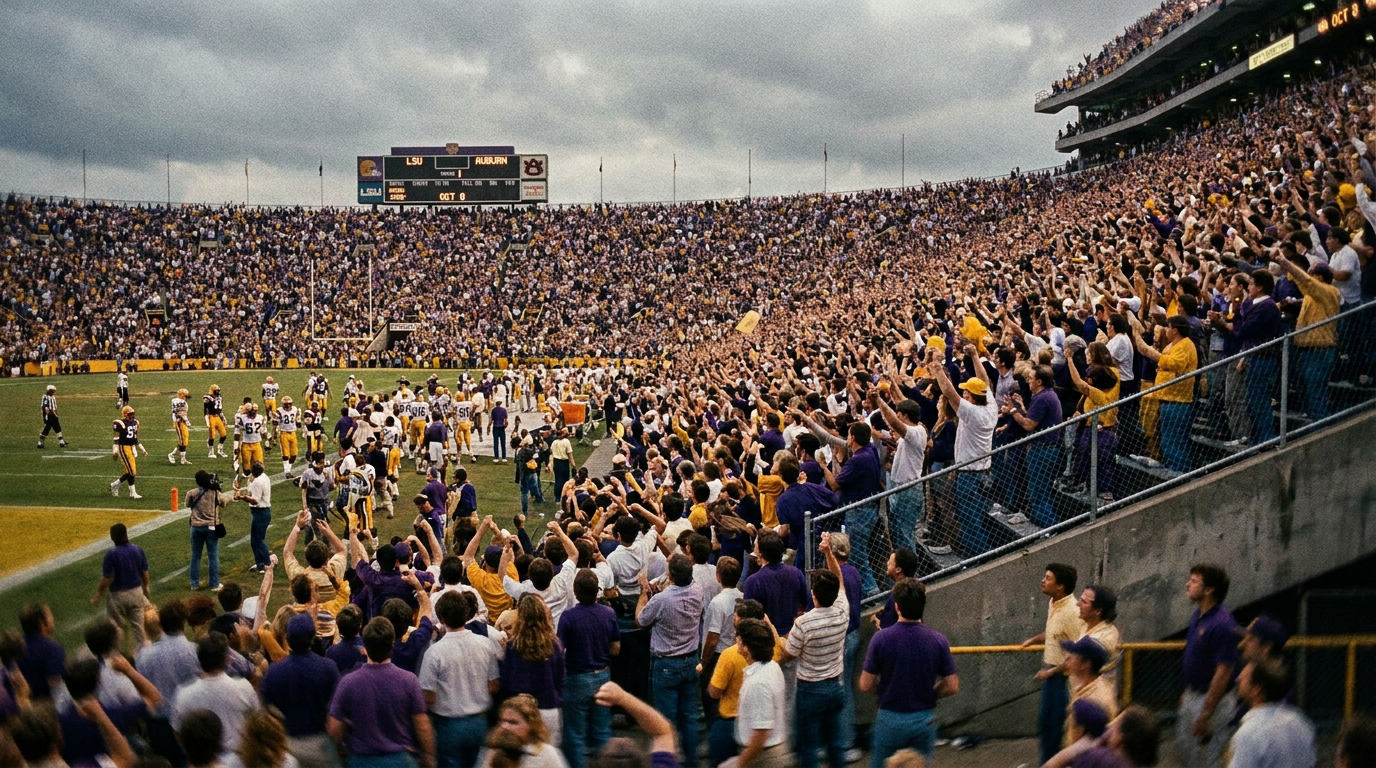
Death Valley devotion has always lived somewhere between religion and family tradition. A viral report now pushes that idea into literal territory, claiming LSU Football supporters could someday make a memorial space near Tiger Stadium their final address—and help fund NIL along the way.
Quick Answer
A November 13, 2026 online report claims LSU could create about 26,000 memorial spaces near Tiger Stadium, with packages from $3,490 to $6,990 and some proceeds supporting NIL. TigerHype found no LSU Athletics announcement, named LSU official, project documents or independent confirmation. The proposal should be treated as unverified unless LSU or an identified project partner supplies documentation.
What does the viral Tiger Stadium memorial claim say?
The viral article published by Trend.CafeX says LSU is developing a dedicated memorial area near Tiger Stadium with approximately 26,000 spaces for cremated remains.
It lists three reported package levels—$3,490 for 10 years, $5,990 for 25 years and $6,990 for 50 years—plus an annual maintenance fee. It also says a significant portion of the proceeds would support LSU’s NIL ecosystem.
Those numbers are specific enough to sound official. The problem is that the article does not identify an LSU official, cite a university document, name a project partner, provide a contract or approval record, or link to an LSU announcement.
Has LSU actually confirmed a memorial project?
No official confirmation has surfaced. As of November 13, 2026, LSU’s official NILSU MAX page does not list a memorial-space program, and TigerHype found no LSU Athletics release announcing the claimed location, capacity, pricing or NIL arrangement.
That missing paper trail matters. A project involving cremated remains on or near university property would require far more than a catchy fundraising pitch. It would need legal authority, operating rules, maintenance responsibilities, long-term access terms, site control and clear financial oversight.
Before LSU fans treat the claim as real, these are the minimum details that should exist publicly:
A named LSU or LSU Athletics official responsible for the project.
An identified developer, cemetery operator, memorial company or other partner.
A precise location and university approval record.
Published terms explaining ownership, access, maintenance and what happens after each contract period.
A documented explanation of how revenue would reach LSU student-athletes or NIL programs.
LSU has addressed fans’ ashes before
The emotional idea is not new in Baton Rouge. In 2015, The Washington Post reported that LSU regularly received requests from families who wanted to scatter ashes on the Tiger Stadium field.
Michael Bonnette, then LSU’s associate athletic director and communications director, said the university did not allow it. The story also described an earlier incident in which a fan with field access scattered his father’s ashes before officials could intervene.
That history confirms the demand. It does not confirm the new commercial project.
The NIL fundraising connection is real—but this project is not confirmed
LSU does use Tiger Stadium for official NIL fundraising. LSU Athletics announced the third annual NILSU MAX Gala for April 25, 2026, with the event staged on the field and proceeds supporting NIL opportunities for LSU student-athletes.
That official event has the markers the viral memorial story lacks: a dated LSU release, named organizers, ticket information, public contact details and a clearly identified beneficiary.
The distinction is the heart of this fact-check. LSU’s NIL operation is real. LSU’s use of Tiger Stadium for fundraising is real. The claimed memorial-space program is not verified by those facts.
Other college football programs have explored similar ideas
The broader concept is plausible. Andrea Adelson’s enterprise reporting examined a University of Nebraska regent’s proposal for a columbarium connected to Memorial Stadium and documented the recurring desire of fans to remain close to college football venues after death.
Nebraska’s idea drew attention but also highlighted the practical obstacles: access, construction, approval, religious concerns, long-term care and the uncomfortable question of what happens when a stadium changes.
Tiger Stadium carries that same emotional weight. TigerHype’s 2026 LSU Football season hub tracks the current Lane Kiffin era, while the LSU Football gameday guide explains how fans experience Death Valley now. The Earthquake Game history shows why the building can feel bigger than football to generations of LSU families.
Could LSU fans support something like this?
Absolutely. Tiger Stadium is one of the few places where a family’s Saturdays, memories and identity can stretch across decades. A legitimate memorial program would likely generate interest.
But emotional plausibility is not factual confirmation. A fan should not make plans, send money or rely on the quoted prices unless LSU or an identified operator publishes verifiable terms.
The bottom line for LSU fans
The viral report is specific, provocative and built around an idea that fits LSU culture. It is still unverified. There is no reliable public evidence that LSU has approved 26,000 memorial spaces near Tiger Stadium or connected such a program to NIL funding.
TigerHype will update this article if LSU Athletics, Louisiana State University or a named project partner releases documentation.
Frequently asked questions
Has LSU confirmed a burial or memorial project near Tiger Stadium?
No. As of November 13, 2026, TigerHype found no LSU Athletics announcement, identified project partner, approval record or project document confirming the memorial-space plan described in the viral report.
What does the viral LSU memorial report claim?
The report claims LSU is developing roughly 26,000 memorial spaces near Tiger Stadium, with 10-, 25- and 50-year packages priced from $3,490 to $6,990, plus annual maintenance fees and an NIL funding component. Those details remain unverified.
Can fans currently scatter ashes on the Tiger Stadium field?
LSU told The Washington Post in 2015 that it did not allow the practice. TigerHype has not found a current LSU program that permits ashes to be scattered or stored at Tiger Stadium.
What would count as reliable confirmation of the LSU project?
Reliable confirmation would come from LSU Athletics, Louisiana State University or a publicly identified project partner and include a named official, project location, legal and operational details, pricing terms and a documented connection to NIL funding.
What do LSU fans think?
Would you want your final resting place near Tiger Stadium, or is this taking LSU fandom too far? Join the discussion in the LSU Football Forum.




Comments