
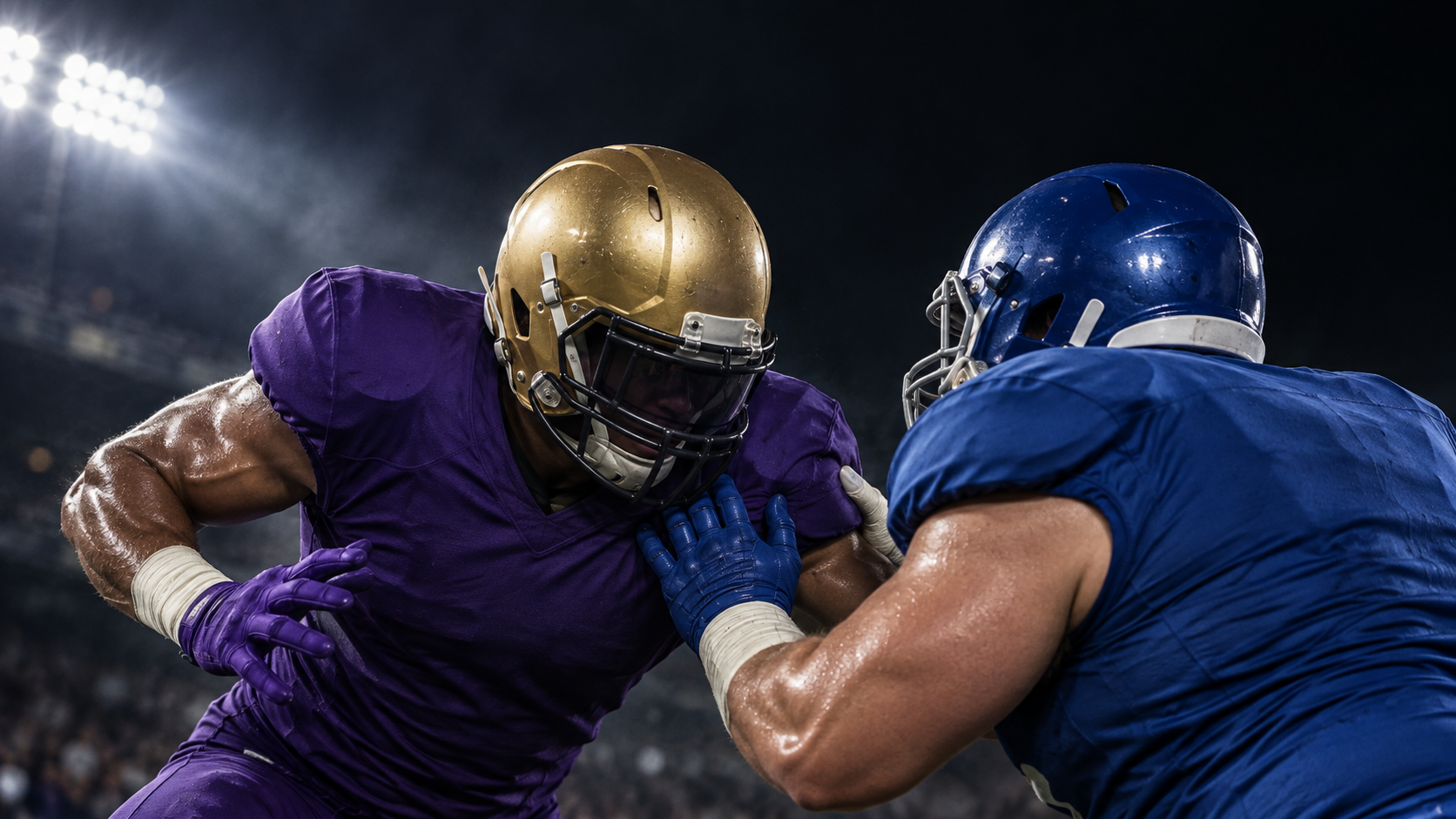
Princewill Umanmielen vs. Lance Heard Is LSU-Kentucky’s Defining Matchup

One side of LSU-Kentucky’s most important individual matchup owns an FBS-leading eight sacks. The other just played an SEC road game without allowing a sack, committing a penalty or giving up a pressure that reached his quarterback.
Princewill Umanmielen against Lance Heard is not a side plot. It is where Saturday night’s game could tilt.
Quick Answer
LSU edge rusher Princewill Umanmielen enters the October 10, 2026 game at Kentucky with an FBS-leading eight sacks. Kentucky left tackle Lance Heard was named SEC Offensive Lineman of the Week after recording five knockdown blocks with no sacks allowed and no penalties in a 35-34 overtime win at South Carolina. Their collision could determine whether Kentucky can protect its comeback formula against LSU’s best pressure source.
Why Princewill Umanmielen changes every Kentucky protection
Umanmielen added his eighth sack of the season during LSU’s 63-14 win over McNeese. LSU’s official game recap identified him as the FBS sack leader after another disruptive performance.
Eight sacks through five games forces an offense to make choices before the ball is snapped.
Kentucky can leave Heard alone and keep more receivers in the pattern. It can slide protection toward Umanmielen and create one-on-one blocks elsewhere. Or it can use a tight end or running back to help, sacrificing route speed for security.
Every option costs something. That is the value of an edge rusher whose production demands a weekly answer.
What Lance Heard just proved
The SEC’s official award release says Heard recorded five knockdown blocks against South Carolina, including two on the same play. He did not allow a sack and was not penalized.
Kentucky’s rushing touchdown went through his blocking area, and the Wildcats generated 266 yards and 17 points after halftime. The conference named Heard its Offensive Lineman of the Week.
That performance matters because Heard did not merely survive obvious passing situations. He helped stabilize an offense that had to throw, rally and protect the quarterback with the result hanging in the balance.
Kentucky also has a fresh receiving answer in freshman Kenny Darby, whose 12-catch breakout gave the Wildcats a reliable underneath target. If Heard gives the quarterback time, Darby and the rest of the route combination become much harder to contain.
What LSU gains if Umanmielen wins early
An early sack does more than erase one play.
It can push Kentucky behind the chains, reduce the value of play-action and force longer-developing third-down concepts. It can also make the Wildcats commit extra help to the edge, changing which receivers release into the pattern and how quickly they reach their landmarks.
LSU’s defense has allowed opponents to convert just 26 percent of third downs through five games. TigerHype’s third-down analysis shows why the Tigers have been able to get off the field.
Umanmielen is one of the clearest mechanisms behind that kind of pressure. If he turns second-and-medium into third-and-long, LSU can unleash the part of its defense that has already produced national-level disruption.
What Kentucky gains if Heard holds up alone
If Heard can block Umanmielen without constant help, Kentucky keeps more answers in the passing game.
A running back can release instead of checking the edge. A tight end can threaten the middle instead of chipping. The quarterback can work a fuller progression rather than immediately protecting himself from the rush.
That is especially valuable in a sold-out night game where one sustained drive can turn Kroger Field into an active advantage. Kentucky’s Blue Out sellout raises the emotional stakes, but the atmosphere only matters if the Wildcats can stay on the field.
Heard’s ability to make Umanmielen ordinary—if only for stretches—would give Kentucky the chance to do that.
How LSU can avoid making this a one-man rush
The danger for LSU is treating Umanmielen’s matchup as the entire pressure plan.
If Kentucky can identify where the rush is coming from and send every protection answer toward one edge, the Tigers become predictable. LSU needs interior push, disciplined rush lanes and coverage that takes away the quarterback’s first read.
That combination forces Heard to win repeatedly instead of merely steering Umanmielen away from a quick throw.
It also protects LSU from the scramble drill. A dominant edge rush loses value if the quarterback can step through an empty middle or escape into a lane created by overaggressive pursuit.
What LSU fans should watch
Start with Kentucky’s formation.
A tight end aligned to Heard’s side may signal help. A running back scanning toward Umanmielen can reveal a protection priority. Quick throws can be another form of protection, getting the ball out before the rush arrives.
Then watch the depth of the quarterback’s launch point. If Kentucky is moving the pocket, using play-action or changing the spot, that is an acknowledgement of Umanmielen’s influence even when he does not record a sack.
Heard has earned confidence after a clean, powerful SEC road performance. Umanmielen has earned national attention after eight sacks in five games.
Saturday night will ask whether Kentucky’s best answer is good enough for LSU’s most dangerous question.


Comments