
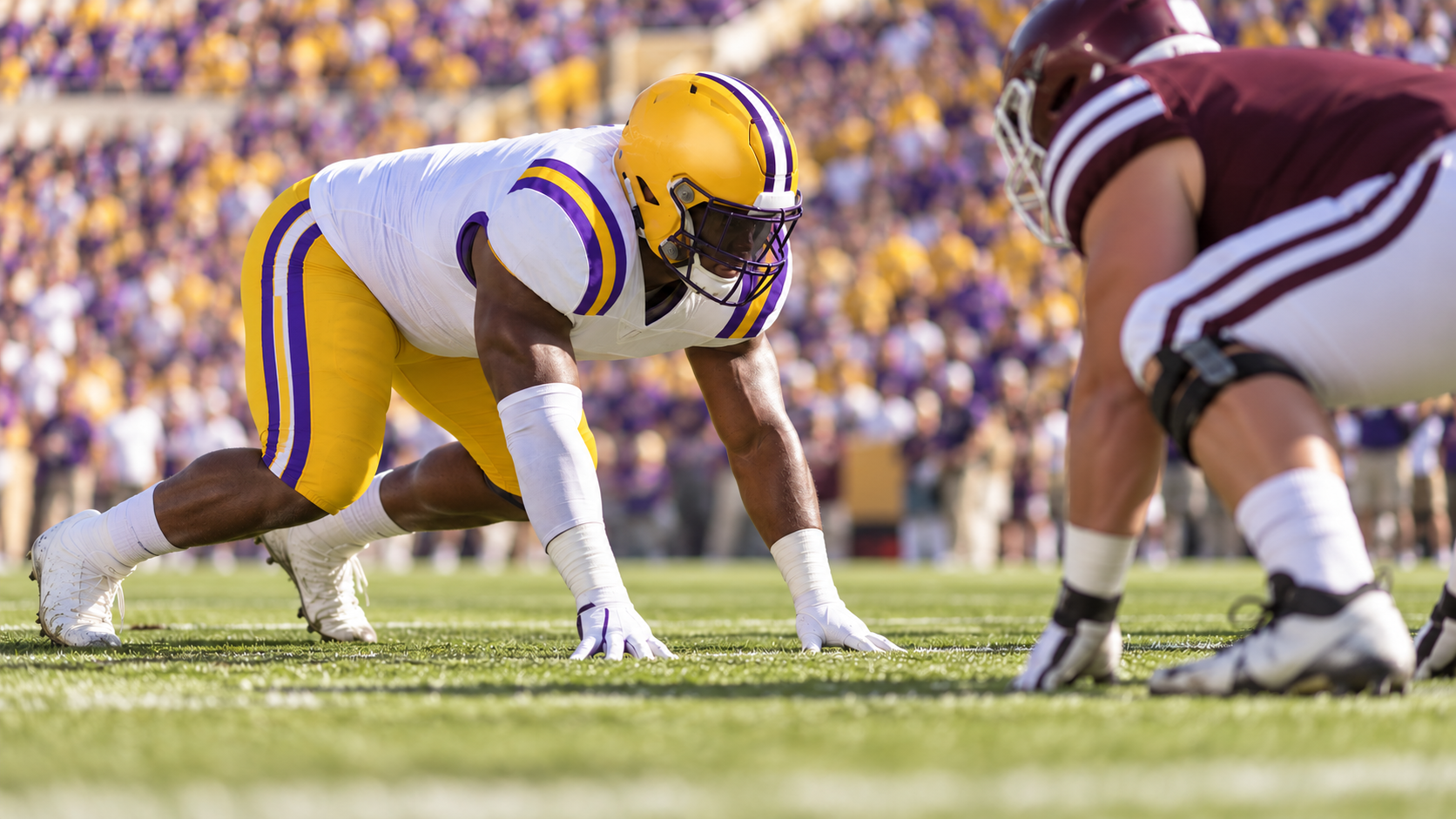
LSU’s 3.83 Sacks Per Game Meet Mississippi State’s Protection Problem

The loudest statistic in LSU–Mississippi State may not be a scoring average. It may be the collision between the Tigers’ pass rush and a Bulldogs offense that has already surrendered pressure at an uncomfortable rate.
Quick Answer
LSU enters the October 17, 2026 matchup averaging 3.83 sacks per game, second in the SEC, while Mississippi State has allowed 2.60 sacks per game. Bulldogs quarterback Kamario Taylor has been sacked 13 times in five appearances and is listed doubtful. Whether Taylor plays or redshirt freshman Parker Puckett starts, LSU’s clearest defensive advantage is creating obvious passing downs and attacking protection before deep routes can develop.
The Statistical Mismatch Is Clear
LSU’s official game notes list the Tigers at 3.83 sacks per game. Mississippi State’s official notes list the Bulldogs at 2.60 sacks allowed per game, with Taylor absorbing 13 sacks through five games. Put those figures together and LSU’s front has a direct path to changing the game without needing a turnover.
The official comparisons can be checked in LSU’s game notes and Mississippi State’s game notes. The numbers describe tendencies, not guarantees, but they identify where the Tigers should press.
Why First Down Controls the Rush Plan
A pass rush is most dangerous when the offense loses the right to disguise its intention. If LSU’s run defense keeps Mississippi State behind schedule, Blake Baker can widen the edges, add simulated pressure and force the quarterback to hold the ball while routes develop.
That matters against a Bulldogs offense built around explosive throws. Taylor has 17 touchdown passes and 1,450 passing yards, but the same aggressive downfield structure can expose protection when the pocket clock speeds up.
TigerHype’s look at Taylor’s big-play arm explains why LSU cannot let deep concepts breathe. The answer is not passive coverage. It is synchronized coverage and pressure.
What Changes if Parker Puckett Starts
Puckett has completed 8 of 14 passes for 89 yards in two appearances, with no touchdowns and no interceptions. His résumé is small, and that uncertainty cuts both ways: LSU has limited film to study, but Mississippi State also has limited evidence that the full offense can operate through him.
For LSU, the temptation will be to overload the young quarterback immediately. The smarter plan is layered. Show pressure, rotate late, make him reset the protection, then decide when to bring an extra rusher. Confusion can be as valuable as raw numbers.
Three Pass-Rush Keys for LSU
1. Win without constant blitzing
Jordan Ross, Princewill Umanmielen, Deuce Geralds and the rest of LSU’s front must create four-man pressure often enough that the secondary can keep help over Mississippi State’s vertical threats.
2. Keep the quarterback inside
Taylor has 159 rushing yards even after sack yardage; Puckett has 24 rushing yards on two attempts. Edge discipline matters because pressure that opens a clean escape lane can become an explosive play.
3. Finish the play
Mississippi State’s tempo punishes near-misses. A free rusher who fails to get the quarterback down can leave the defense scattered against a scramble or late throw. LSU’s tackles must be controlled, not merely violent.
How the Pass Rush Connects to the Bigger Game
Pressure can also solve two other LSU concerns. It can shorten possessions and protect special teams from repeated field-position stress. TigerHype has already detailed why special teams cannot give Mississippi State a short field and why turnovers remain the swing statistic.
A sack on second down can create the same practical result as a takeaway: a punt, favorable field position and another chance for LSU’s offense to dictate tempo.
What It Means for LSU
This matchup gives LSU a chance to make its defensive strength visible early. The Tigers do not need to chase highlight hits. They need repeated disruption—negative plays, hurried decisions and protection calls that never feel settled. If LSU’s 3.83-sack pace travels into Saturday morning, Mississippi State’s offense may never reach its preferred speed.
Which LSU defender is most likely to change the game with pressure? Make your pick in the LSU Game Day discussion.


Comments